Tag: bearish stock setup

  • Smart Money Is Quietly Exiting This Name

    Smart Money Is Quietly Exiting This Name

    There’s been a marked shift developing beneath the surface in parts of the services and software space, particularly among companies tied to employment trends. The tape has been very unforgiving toward businesses that rely on steady labor expansion, as hiring momentum has flattened out and forward expectations have cooled. What’s notable is how quickly investors have rotated away from these names, even as broader indices attempt to stabilize. It’s not outright panic—more a quiet repricing of growth assumptions tied to the labor cycle.

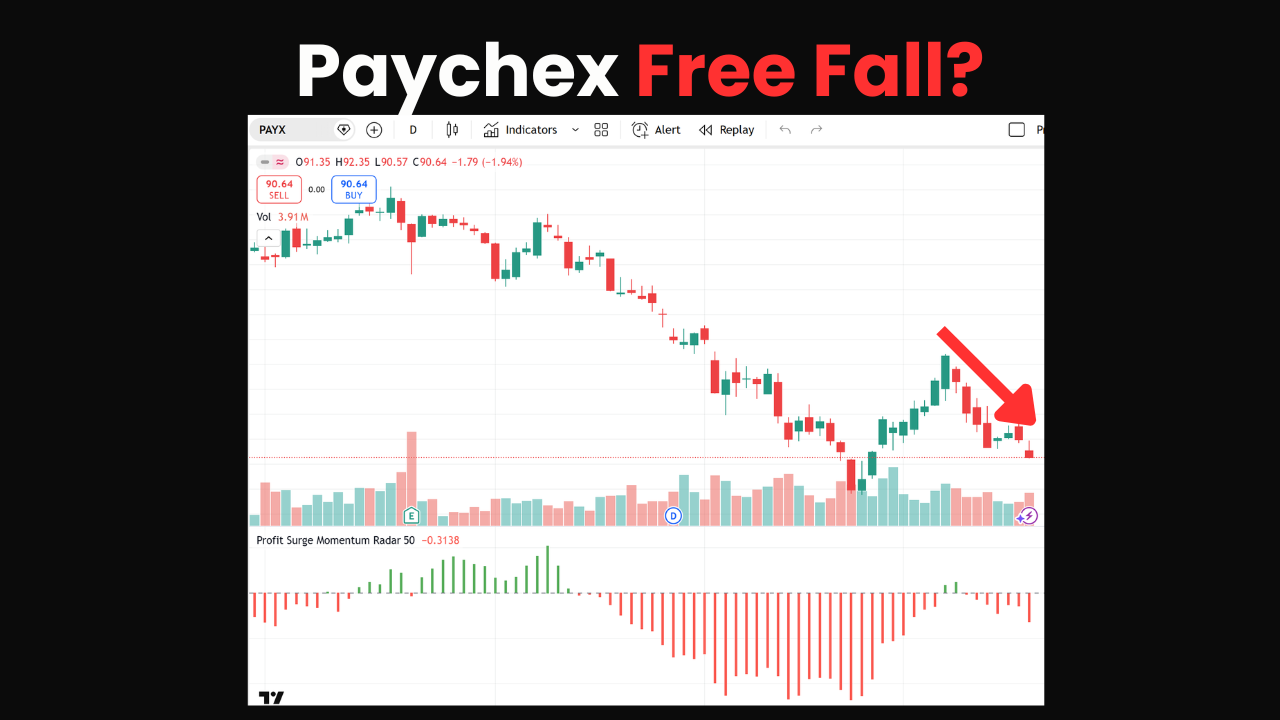
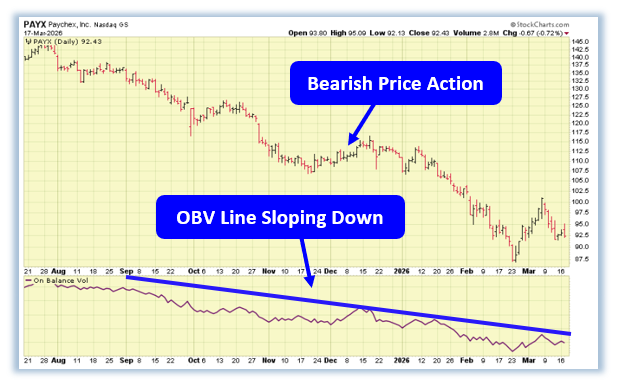
    One name that surfaced in today’s review is Paychex (PAYX). The backdrop is challenging: a stalled “no hire, no fire” labor environment now showing early signs of contraction, paired with longer-term concerns around AI-driven disruption in payroll and HR services. Price has reflected that pressure, carving out a steady sequence of lower highs and lower lows since its June peak, with little evidence of sustained buying interest. More telling is the OBV line, which has continued to drift lower throughout the decline and barely responded during recent rallies—suggesting institutions have yet to step in with conviction.
    From a trade construction standpoint, this type of orderly downtrend lends itself to defined-risk bearish positioning, particularly through put options. Rather than trying to time an exact top or bottom, the focus shifts to participating in continuation while clearly defining downside exposure. In this case, a put structure offers asymmetry—if the stock were to decline by roughly 10% into expiration, the option setup could translate to a gain in the neighborhood of 88.9%, though outcomes will ultimately depend on timing, volatility, and price path. It’s less about prediction and more about aligning risk with a prevailing trend that hasn’t yet shown signs of reversal.

    If you find yourself drawn to setups where the technicals and macro narrative are aligned like this, it may be worth exploring my Option Edge Newsletter. For ONLY $1 in your first month, you’ll get a detailed breakdown of my top trade idea each week—including the exact structure and reasoning behind the trade. It’s a straightforward way to stay connected to actionable ideas without overcomplicating the process. Click here to get signed up today!

    Wishing You the Best in Investing Success,
    Paycheck's OBV line confirms the bearish trend for the stock.

    Blane Markham

    Chief Trading Strategist

    Have any questions? Email us at support@markhamtrading.com

    *Trading incurs risk and some people lose money trading.
  • Bank Stocks Are Starting to Roll Over

    Bank Stocks Are Starting to Roll Over

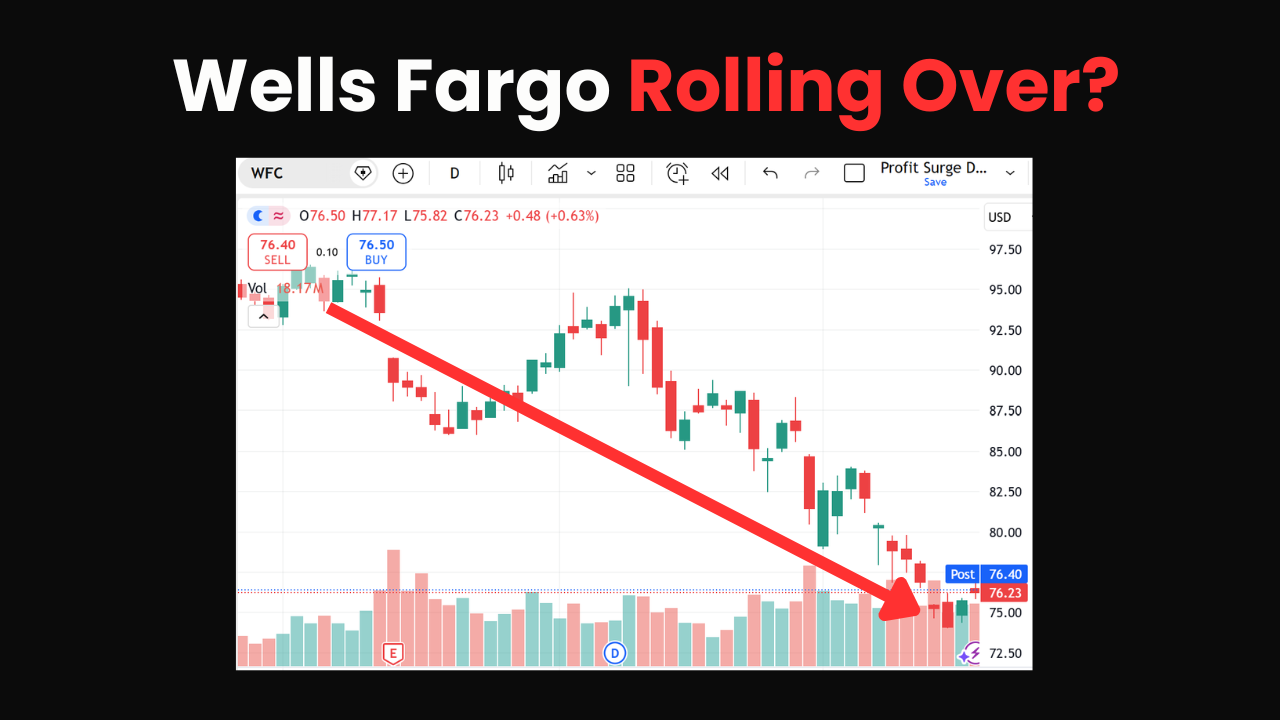
    Leadership within the financial sector has noticeably cooled to start the year. After a powerful run through much of last year, many of the large banks have slipped into steady distribution as buyers have become less aggressive on rallies. The tape lately has reflected more defensive positioning, with weakness appearing on even modest bouts of economic concern and fears about the industry’s ties to potential issues in private credit. In this environment, certain names are beginning to separate from the pack on the downside.

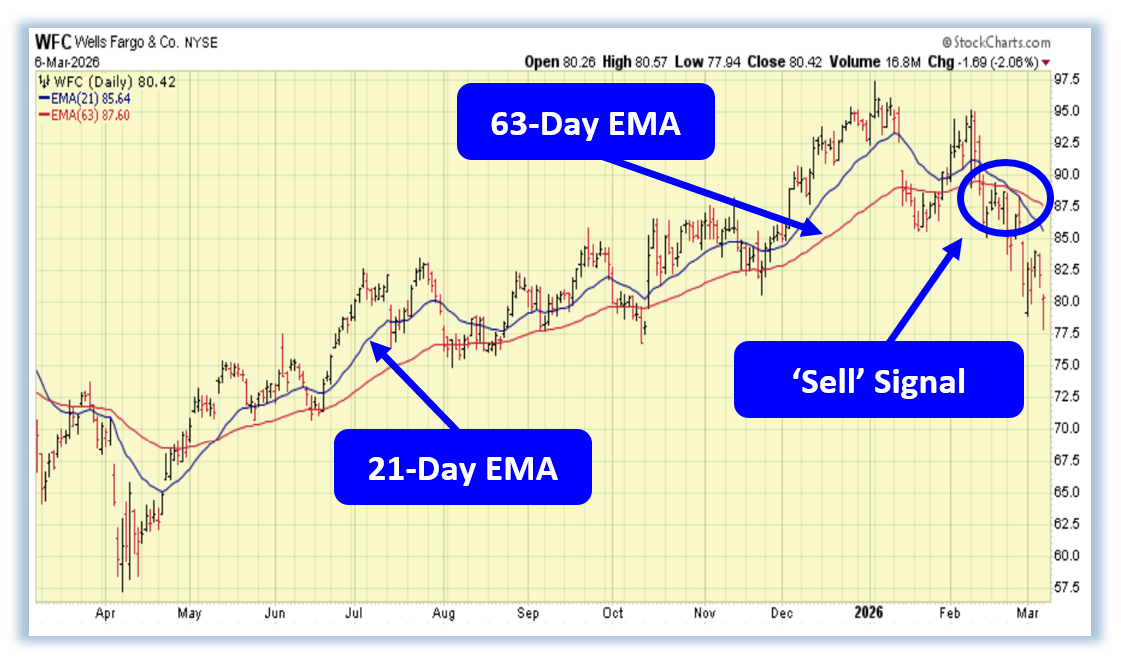
    One that recently stood out on the technical front is Wells Fargo & Co. (WFC). The shares have carved out a clear pattern of lower highs and lower lows since the start of the year, reflecting fading demand from buyers. More recently, my Profit Surge system flagged a fresh sell trend as the 21-day EMA crossed below the 63-day EMA, with price now trading beneath both averages. When that type of alignment occurs within an already declining structure, it typically signals that downside momentum is beginning to take control of the tape.

    From a trading standpoint, the view here leans bearish, and one straightforward way to express that bias would be through put options. Bank stocks often carry relatively modest time value, which can limit the attractiveness of spread trades, so a simple directional structure can sometimes be the cleanest approach. If the current decline were to continue, the puts would participate in that downside move while keeping risk defined to the premium paid. In fact, one available put contract currently offers a potential return of roughly 98.0% if the shares were to decline another 10% by expiration, illustrating how even a measured continuation of the trend could create meaningful leverage.

    If you enjoy uncovering trade setups like this one, you may want to take a look at my Weekly Profit Opportunity Newsletter. For just $1 for your first month, you’ll see the exact trade I’m focused on each week—including the technical breakdown and full options structure—Of course there are winners and losers just like any system, but a recent alert produced a 104.5% profit opportunity. Begin your $1 trial period today!

    Wishing You the Best in Investing Success,

    Blane Markham

    Chief Trading Strategist

    Have any questions? Email us at support@markhamtrading.com

    *Trading incurs risk and some people lose money trading.
  • Quantum Hype Meets Harsh Market Reality

    Quantum Hype Meets Harsh Market Reality

    Speculative technology groups that captured attention last year have inarguably lost their mojo as the market’s tone shifted toward profitability, balance sheet strength, and durable earnings growth. As that rotation has unfolded, many of the more narrative-driven thematic stocks have struggled to regain traction. The tape has been particularly unforgiving to companies still operating in early-stage development cycles. When sentiment pivots like this, trend persistence often becomes the dominant force driving price action.

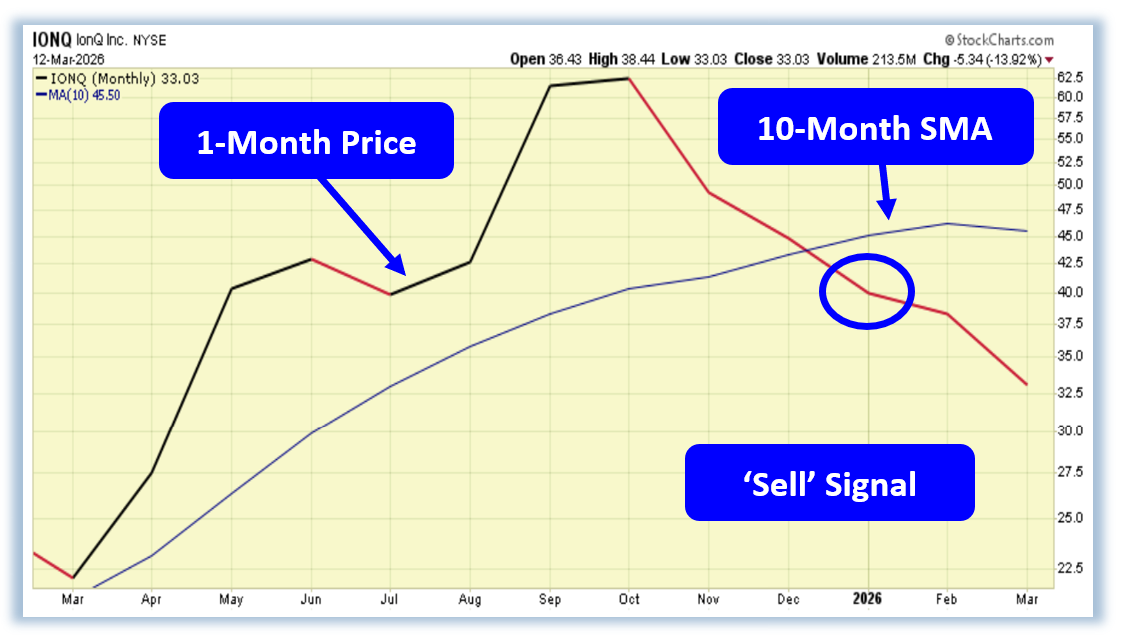
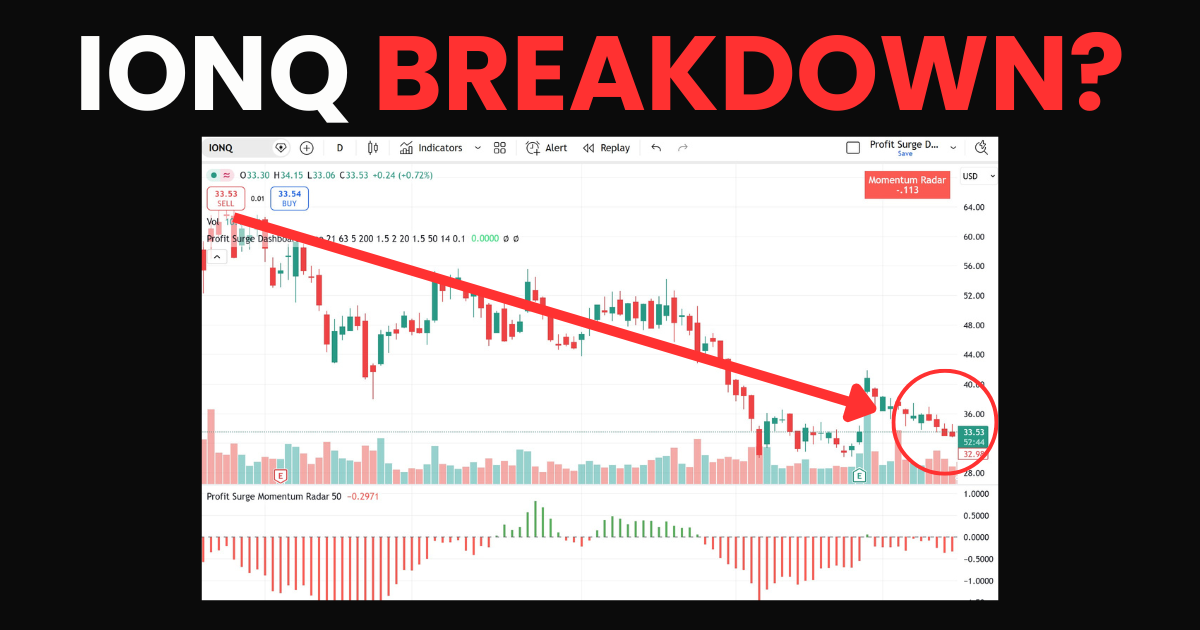
    That backdrop helps explain why IonQ Inc. (IONQ) surfaced on today’s scan. After peaking last September, the stock has steadily deteriorated alongside much of the quantum computing basket and now sits more than 50% below its 52-week high. The defining signal came when its 1-Month Price moved beneath the 10-Month SMA, triggering a PowerTrend “Sell” signal back in January. Rather than stabilizing, the gap between price and that longer-term average has continued to widen, reinforcing the bearish structure.

    Even with that trend firmly pointed lower, simply purchasing puts isn’t the most efficient approach right now because option premiums carry considerable time value. A more balanced expression could be an in-the-money put debit spread, pairing a long higher-strike put with a short lower-strike put to define risk while reducing upfront cost. Structures like this can still participate meaningfully if the decline continues while offering some tolerance if the stock chops sideways. At current pricing, one such spread offers roughly 51.5% potential return if the stock drifts lower, stays relatively flat, or even rebounds modestly by roughly 10%.

    For traders who appreciate this type of chart-driven opportunity, our Options Edge Newsletter walks through setups like this each and every week. Right now readers can try it for $1 for the first month — just $0.25 per week — and receive four weeks of trade ideas and chart breakdowns. It’s a simple way to see how our team spots opportunities and structures actionable trades in real time. Gain access to these trade ideas today!

    Wishing You the Best in Investing Success,

    Blane Markham

    Chief Trading Strategist

    Have any questions? Email us at support@markhamtrading.com

    *Trading incurs risk and some people lose money trading.
  • This Cruise Stock Just Flipped Bearish

    This Cruise Stock Just Flipped Bearish

    Travel and leisure names have seen a noticeable shift in tone lately as the market rotates away from some of last year’s stronger consumer recovery themes. Several charts across the group have transitioned from steady uptrends into choppier trades with rallies increasingly running into overhead resistance. That type of behavior often signals a market that is beginning to reassess prior strength. When momentum begins to fade after an extended run, experienced traders tend to pay close attention to the emerging trend structure and trade alongside it.

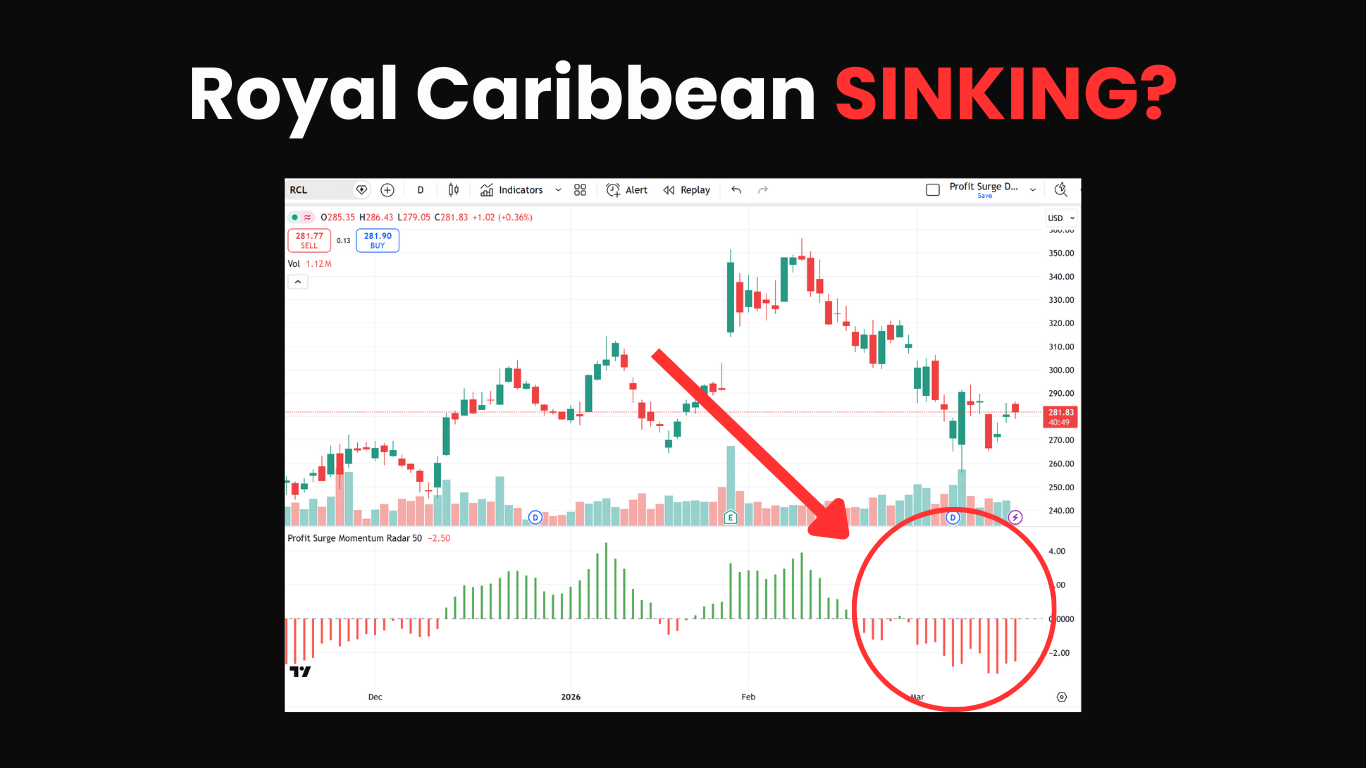
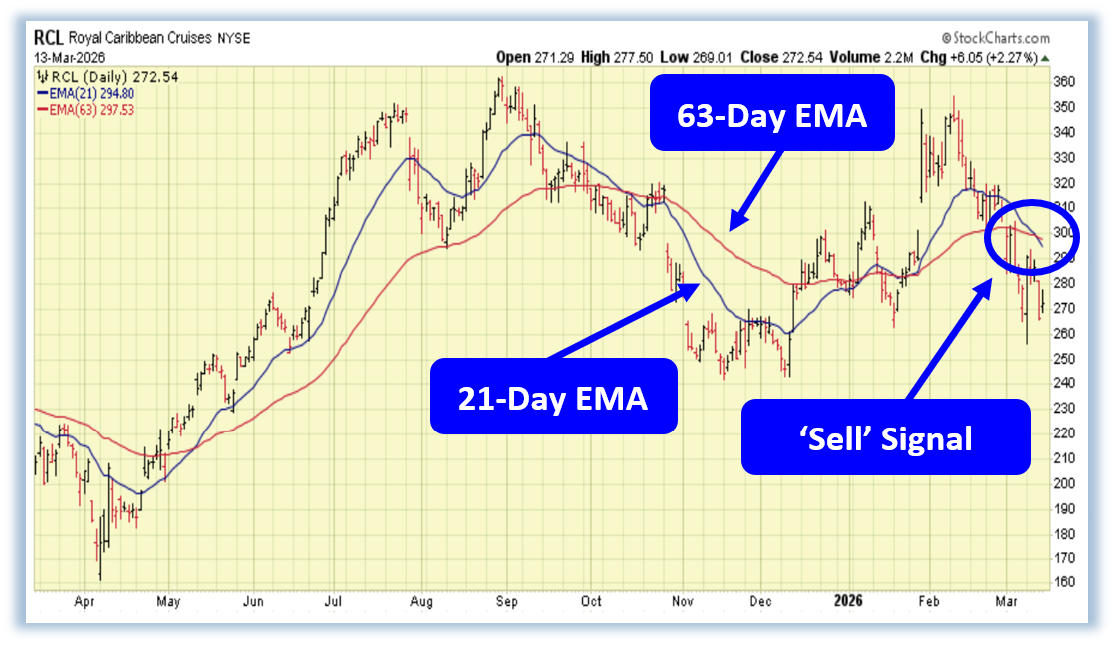
    One chart that recently moved onto our radar is Royal Caribbean Cruises (RCL). Over the past six months the stock has experienced significant volatility in both directions, including a sharp decline through Q4 followed by a short-lived recovery attempt earlier this year. That rebound stalled in mid-February after running into heavy resistance, and the shares have since resumed their downward trajectory. Just last week the 21-day EMA crossed below the 63-day EMA, triggering a fresh ProfitSurge ‘Sell’ signal — a negative convergence that often reflects a market shifting into a pattern of lower highs and lower lows.

    Given that backdrop, the setup lends itself to a bearish options structure while still accounting for the stock’s recent volatility. One approach would be an in-the-money put debit spread, which defines risk while allowing participation if the trend continues lower. Because the put spread sits ITM, the structure provides some cushion in the event of another oversold bounce before the broader move unfolds. At current pricing there is a spread that could offer roughly 52.7% potential return if RCL shares decline, remain flat, or even rise modestly by around 10%, illustrating how the position builds a margin of error into the trade idea.

    For traders who enjoy seeing how we identify these types of setups directly from the tape, our Options Edge Newsletter goes deeper. Each week we send members multiple actionable trade ideas with full option structures and detailed technical breakdowns. Right now, a one month subscription is available at a substantial discount for readers looking to sharpen their trading edge. Lock in your deal for this newsletter today!

    Wishing You the Best in Investing Success,

    Blane Markham

    Chief Trading Strategist

    Have any questions? Email us at support@markhamtrading.com

    *Trading incurs risk and some people lose money trading.